
For years, heat pumps were seen as a niche solution: effective in mild climates or single housing units, but unrealistic for large commercial buildings. That perception is changing fast. As pressure grows to reduce emissions and control operating costs, many commercial building owners are asking: can heat pumps work on commercial buildings
The short answer: yes, and increasingly, they already are.
Thanks to advances in technology and growing adoption, commercial heat pumps are now viable in far more locations and building types than many owners realize. In fact, the global commercial heat pump market is expected to grow from $17.8 billion in 2025 to $61.5 billion in 2035. Read on to learn how commercial heat pumps work and where they are proving effective today.
Simply put, heat pumps move heat rather than generate it. Using electricity, they extract heat from outdoor air, ground or other sources and transfer it indoors for heating with a refrigerant and a compressor. For cooling, the process reverses, extracting heat from indoors and transferring it outdoors. This reduces reliance on fossil fuels and allows a single system to provide both heating and cooling.
Air source heat pumps are the most common option, accounting for 58.2% of the commercial market. While they all use outdoor air as a heat source, what happens next depends on the type of system. Here’s a look at the two most common options:
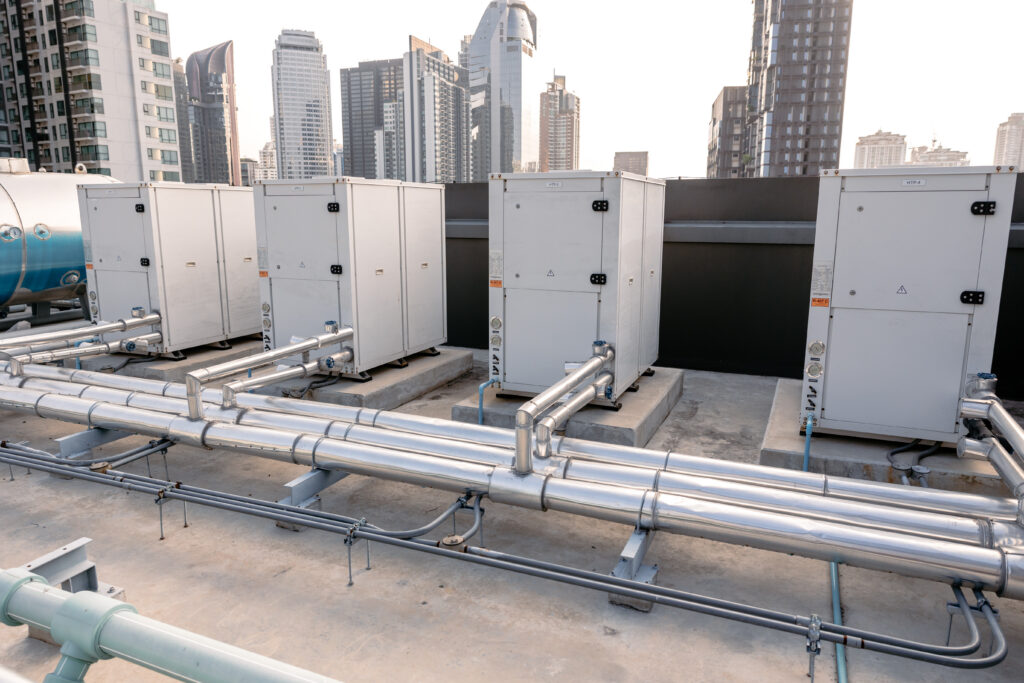
Commercial air source heat pumps work by pulling heat from the outdoor air and transferring it indoors. These systems are typically configured as packaged rooftop units or split systems and integrate directly with ducted air distribution. Variable-speed compressors and advanced controls allow output to modulate based on load, improving efficiency and maintaining consistent indoor temperatures across large spaces.
This system typically includes the following key components:
They can be installed across a wide range of commercial building types, including retail, healthcare facilities, and high-rise buildings.
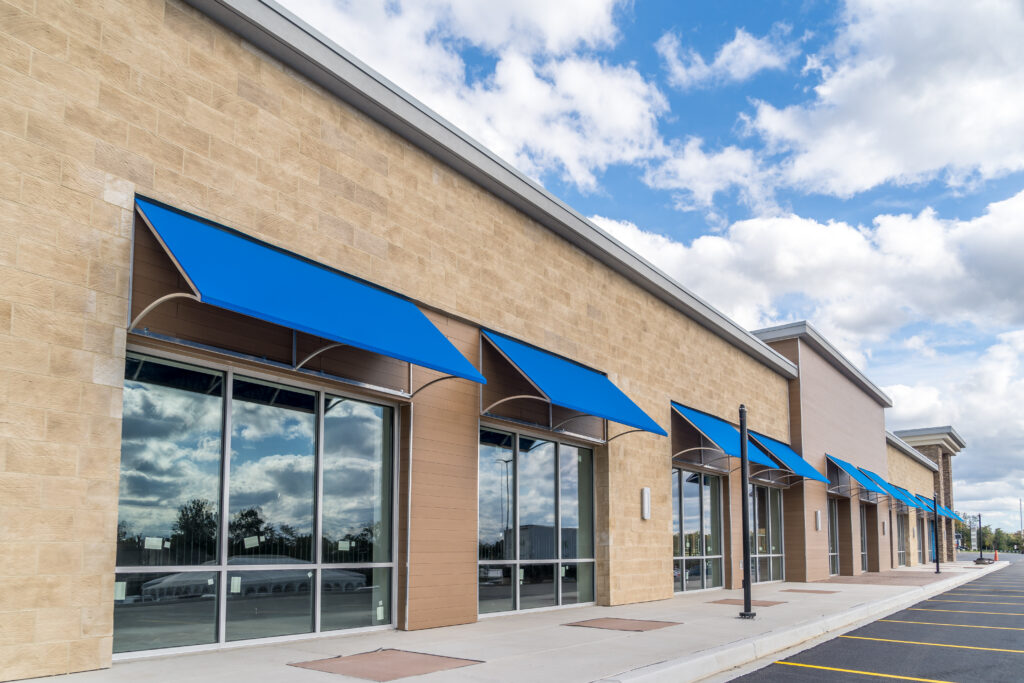
For many commercial buildings, the answer is yes, especially when heat pumps are evaluated as part of new construction or a planned HVAC and refrigeration upgrade rather than a standalone replacement.
For new commercial construction, heat pumps are often the most straightforward and future-ready HVAC-R solution. Designing around a heat pump system from the start allows engineers to right-size equipment, plan electrical infrastructure and select distribution systems that support low-temperature heating.
This integrated approach avoids many of the cost and compatibility challenges that can arise during retrofits and positions the building for long-term efficiency and regulatory compliance.
Retrofitting an existing commercial building with a heat pump is possible, but it requires a more strategic approach.
Many older buildings were designed around high-temperature boilers or furnaces. In some cases, existing piping, ductwork or electrical capacity may limit how much of the heating load a heat pump can efficiently serve. For example, converting a hydronic system designed for high-temperature water may require pipe resizing or distribution upgrades that are not always practical.
Despite these challenges, heat pumps are frequently used in retrofit projects through phased implementation. When a full conversion is not feasible, pairing heat pumps with legacy systems can improve accessibility while controlling upfront costs and minimizing disruption.
Commercial heat pumps are accessible options for a wide range of commercial buildings across the United States.
Heat pumps offer extensive benefits:
They make the most sense for:
At CoolSys, we help commercial building owners evaluate where heat pumps fit based on real operating conditions and long-term goals. Accessibility starts with understanding your building, your climate and your timeline.
Questions? Need Service?
Reach us directly for service requests, employment opportunities or to inquire about our acquisition process. Our team is ready to respond swiftly and answer any questions you may have.


Questions? Need Service?
Reach us directly for service requests at 866-417-6586, or fill out the form . Our team is ready to respond swiftly and answer any questions you may have.
Questions? Ready to Get Started?
Discover the advantages of aligning with the foremost authority in HVAC and refrigeration services. As a partner steeped in industry knowledge, we’re dedicated to elevating you, your team and your business. Learn More about our acquisition process and benefits, or fill out the form below.