How to Choose the Right Commercial HVAC System for Performance, Cost, and Scalability
Choosing the right commercial HVAC system is a long-term business decision—not just an equipment purchase. The system you select directly impacts capital cost, operating expense, occupant comfort, energy efficiency, and future flexibility.
Three systems dominate most commercial HVAC conversations today:
Rooftop Units (RTUs)
Variable Refrigerant Flow (VRF) systems
Chilled Water HVAC systems
This guide breaks down rooftop units vs. VRF HVAC and VRF vs. chilled water HVAC, so facility leaders, developers, and engineers can align system selection with building performance and lifecycle goals.
Rooftop Units (RTUs): Proven, Simple, and Cost-Effective
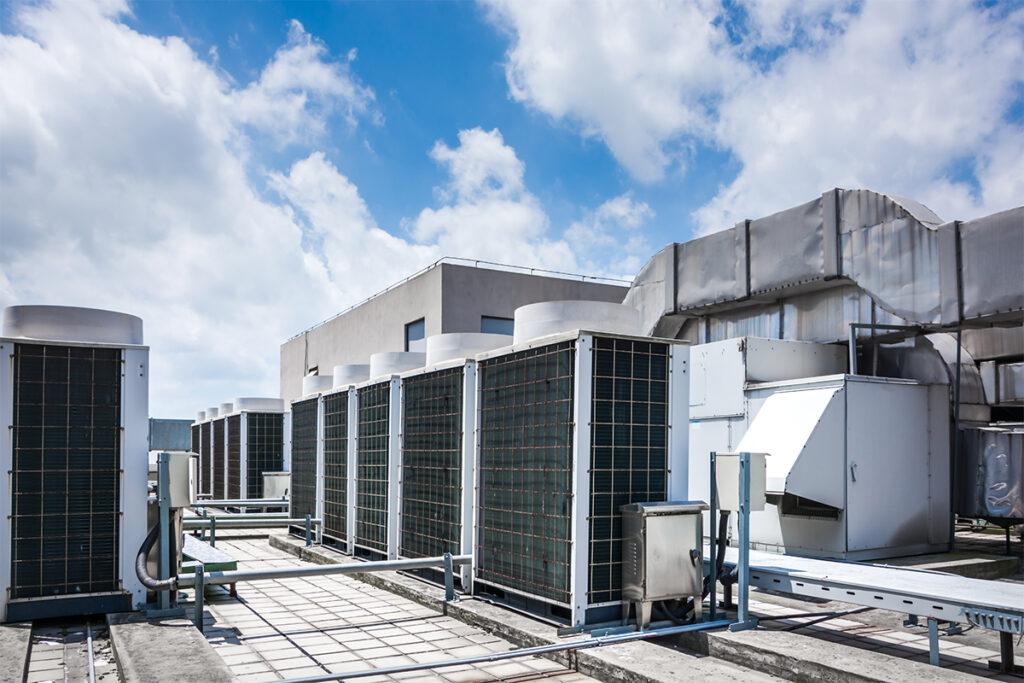
Rooftop Units (RTUs) are self-contained HVAC systems installed on the roof and connected to ductwork serving the occupied space. They remain the most common choice for low-rise commercial buildings due to their simplicity and speed of deployment.
Advantages of Rooftop Units
Lower upfront cost
RTUs are typically the most economical option to install, with fewer trades and faster construction schedules.
Operational simplicity
Packaged design allows easier troubleshooting, servicing, and replacement.
Minimal interior footprint
Mechanical space stays on the roof, preserving leasable or usable interior area.
Limitations of Rooftop Units
Limited zoning and comfort control
RTUs typically serve large areas uniformly, which can lead to complaints about temperature.
Lower part-load efficiency
Traditional RTUs cycle on/off and do not modulate as precisely as VRF or chilled water systems.
Structural considerations
Roof reinforcement may be required depending on unit size and building age.
BEST FIT
Single-story or low-rise buildings with open floor plans—retail, warehouses, quick-service restaurants, and small offices.
Not Sure it RTUs can meet your comfort or efficiency needs?
Request a system feasibility review before locking in design.
When comparing rooftop units vs VRF HVAC, VRF systems represent a major leap in control and efficiency.
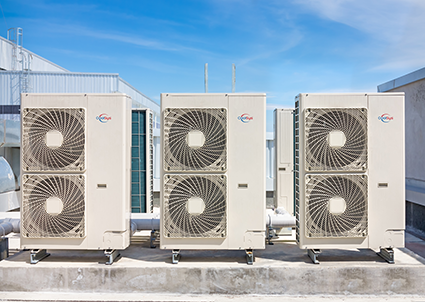
Variable Refrigerant Flow (VRF) systems use a single outdoor unit connected to multiple indoor fan coils, precisely modulating refrigerant flow based on real-time demand.
Advantages of VRF HVAC Systems
Superior energy efficiency
Inverter-driven compressors modulate output instead of cycling, reducing energy waste at part load.
Structural considerations
Roof reinforcement may be required depending on unit size and building age.
Design flexibility and quiet operation
Minimal ductwork and compact indoor units suit retrofit projects and space-constrained buildings.
Limitations of VRF HVAC Systems
Higher initial investment
Equipment and installation costs exceed RTUs.
Specialized installation and service requirements
Requires trained technicians and proper commissioning.
Refrigerant volume considerations
System design must account for refrigerant safety standards and leak detection requirements.
BEST FIT
Office buildings, hotels, healthcare facilities, and mixed-use developments where comfort control and efficiency drive ROI.
Evaluating rooftop units vs VRF HVAC for a new or retrofit project?
Chilled Water HVAC Systems: Built for Scale and Longevity
When the discussion shifts to VRF vs chilled water HVAC, scale becomes the deciding factor.
Chilled water systems use centralized chillers to cool water, which is then distributed to air handlers or fan coils throughout the facility. These systems dominate large, mission-critical environments.
Advantages of VRF HVAC Systems
Unmatched scalability
Ideal for high-rise buildings, campuses, hospitals, and industrial facilities.
Long equipment lifespan
Chillers and hydronic infrastructure often exceed 25 years with proper maintenance.
High efficiency at large loads
Performance improves as cooling demand increases.
Limitations of VRF HVAC Systems
High upfront capital cost
Requires chillers, pumps, piping, cooling towers, and mechanical rooms.
Operational complexity
Ongoing water treatment, controls optimization, and skilled maintenance are essential.
Space requirements
Central plants and cooling towers require dedicated real estate.
BEST FIT
Hospitals, data centers, universities, airports, and large manufacturing facilities.
Comparing VRF vs chilled water HVAC for a large facility or portfolio?
Choosing the Right HVAC System Starts with the Right Partner
No HVAC system is universally “best.” The right solution depends on building size, occupancy patterns, climate, budget, and long-term operational goals.
At CoolSys, we help owners and facility leaders move beyond equipment comparisons. Our team evaluates:
Learn how multi-site HVAC asset management reduces costs, improves reliability, and simplifies operations for facility managers across multiple locations.
Reach us directly for service requests at 866-417-6586, or fill out the form . Our team is ready to respond swiftly and answer any questions you may have.
Questions? Ready to Get Started?
Let’s Move Forward. Together.
Discover the advantages of aligning with the foremost authority in HVAC and refrigeration services. As a partner steeped in industry knowledge, we’re dedicated to elevating you, your team and your business. Learn More about our acquisition process and benefits, or fill out the form below.
We use Cookies to offer you a better browsing experience, analyze site traffic, personalize content, and serve targeted advertisements. More information can be found here. We do not sell or share your information with any third parties. By continuing to browse Coolsys.com you will consent to our use of cookies.