
Commercial vs Residential HVAC: Why the Difference Matters for Facility Managers
If you’ve ever searched commercial vs residential HVAC, you’re not alone. Many facility managers inherit buildings originally designed with residential-style systems — or managed by residential-focused providers — which can create performance, reliability and cost issues over time.
Understanding the difference between commercial and residential HVAC is critical for:
- HVAC asset lifecycle management
- Lifecycle cost reduction
- Operational reliability
- Compliance requirements
- Capital planning
While both systems heat and cool buildings, commercial HVAC systems operate under significantly more demanding conditions. Choosing the right design, maintenance strategy, and service partner directly impacts cost, uptime, and performance.
Let’s explore five key differences between commercial and residential HVAC systems — and why they matter for facility managers.
01. Commercial vs Residential HVAC: System Complexity
Residential HVAC Systems
Residential HVAC systems typically include:
- Split systems
- Heat pumps
- Packaged units
- Single thermostat control
These systems are designed for:
- Predictable occupancy
- Smaller spaces
- Lower load variation

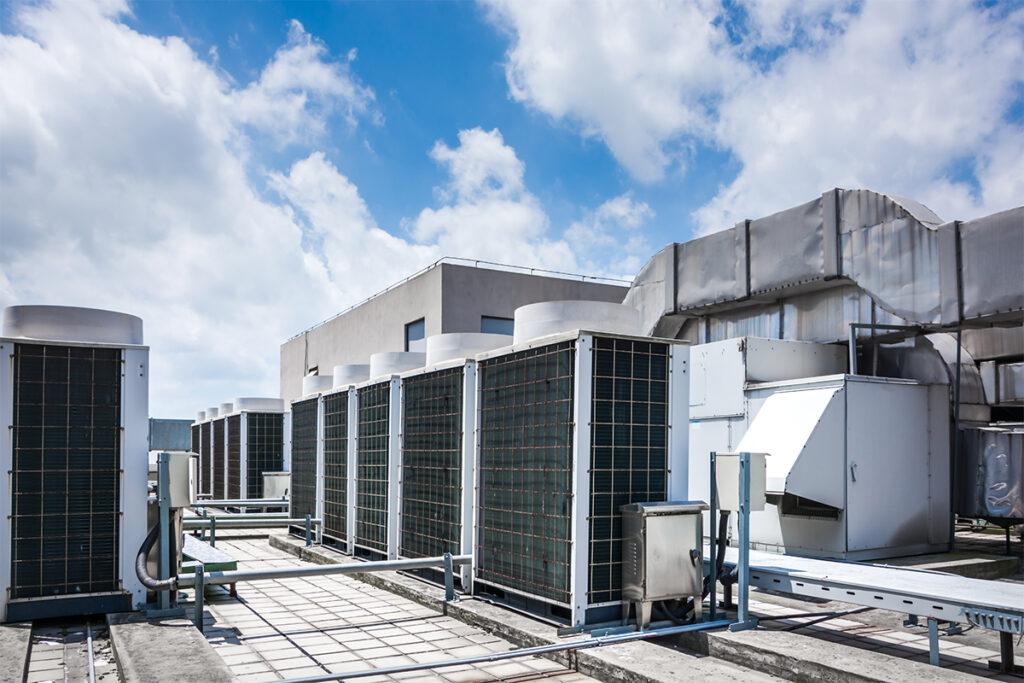
Commercial HVAC Systems
Commercial HVAC systems must support:
- Multi-zone buildings
- Variable occupancy
- Equipment heat loads
- Continuous operation
Commercial HVAC systems often include:
- Rooftop units (RTUs)
- Chillers
- Boilers
- Cooling towers
- Variable refrigerant flow (VRF) systems
- Building automation systems (BAS)
02. Operational Demands: Commercial vs Residential HVAC
Another key difference is operational demand. Residential systems typically operate intermittently based on occupancy patterns.
Commercial HVAC systems often operate:
- 12–24 hours per day
- Across multiple zones
- With tighter temperature requirements
- With higher internal heat loads
System failures in commercial environments can cause:
- Revenue loss
- Product spoilage
- Safety risks
- Tenant dissatisfaction
This makes reliability and preventive maintenance critical
Is your HVAC System Designed for Commercial Performance
Get a professional HVAC assessment to improve reliability, reduce downtime, and optimize lifecycle costs.
03. Regulatory and Compliance Differences
Commercial HVAC systems must comply with more complex regulations than residential systems.
Commercial HVAC compliance may include:
- ASHRAE standards
- EPA Regulations
- Local mechanical codes
- workplace safety requirements
Failure to comply can lead to:
- Fines
- Operational disruption
- Liability exposure
04. Maintenance Strategy Differences
Commercial HVAC maintenance requires a proactive approach. Residential maintenance is often reactive.
Commercial environments require:
- Preventive maintenance programs
- Asset tracking
- Multi-site service coverage
- Compliance documentation
- 24/7 emergency support
Preventive maintenance improves:
- Equipment lifespan
- Energy efficiency
- Operational reliability
05. Cost and Lifecycle Differences
Commercial HVAC systems require:
- Larger capital investment
- Longer lifecycle planning
- Repair vs. replace analysis
- Portfolio Budgeting
Commercial HVAC systems advantages:
- Modular component replacement
- Energy optimization opportunities
- Lifecycle cost reduction
Commercial HVAC systems advantages:
Why Commercial HVAC Expertise Matters
Commercial HVAC systems require specialized expertise including:
- Engineering
- Installation
- Maintenance
- Lifecycle Planning
- Compliance Management
Why Commercial HVAC Expertise Matters
CoolSys supports facility managers with:
With nationwide coverage and 2,500+ technicians, CoolSys helps facility managers improve reliability, reduce costs, and optimize HVAC lifecycle performance.